Slice of Life Challenge day 2 #sol18

A new chapter of life has begun

EyeglassesA New Chapter

The day had finally arrived.  Raindrops intermittently plopped onto my windshield, descending from gray clouds above.  Reaching behind the driver’s seat of my 2003 Honda Element, I pulled a manila folder from my bag.  Inside this folder was the “New Patient” form I had been asked to complete before arriving.  Oddly, part of me remained in denial, even as I pulled the glass door open and entered Dr. David Sobel’s office.  Looking around, I forced myself to remain calm as I cast my gaze upon the multitude of eyeglasses adorning the walls, backlit in high-tech displays.  Beautiful people wearing glasses stared back at me from strategically placed posters.  Yes, this dreaded day had come.

“Can I help you?” came the voice.  It was then I knew for certain a new chapter of my life had started.  Previous chapters included a protagonist with vibrant eyesight, able to read easily, even the smallest print from miles away. However, that protagonist – me – had noticed in recent months that…well, things had changed.  Suddenly, reading a simple email on an iPhone, or a book with perhaps 10-point New Times Roman font, had become much more difficult, a far more laborious task than in previous decades.  “You’re going to run out of arm!” a colleague joked at work one day, as she watched me holding my phone away from my face and squinting.

“Um, yes, I have a 4:30 appointment?” I replied to the woman standing behind the mahogany-colored table in Dr. Sobel’s foyer.  After the obligatory exchange of pleasantries and insurance information, the woman led me to the back of the office and directed me to have a seat.  The eye doctor would be right with me.  He was.

Dr. Sobel invited me into his office.  “Have a seat here in this red chair,” he said.  Behind the red chair, I noticed a small Picasso painting positioned next to a colorful collage of John Lennon’s visage.  Hidden speakers piped in smooth jazz- I recognized Spyro Gyra’s 1970’s hit “Morning Dance.”  “Do you like this music?” I queried.  “Oh yes, I’ve been a jazz fan my whole life,” the doctor replied.  Wow, a jazz fan.  I’m a jazz musician.  Maybe this would be okay, I thought.

From this point forward, Dr. Sobel and I connected.  He taught me amazing details about my eyes.  He showed me what it will look like to be able to see again.  He took incredibly detailed digital pictures of my eyeballs.  And suddenly, I felt part of an adventure, instead of a victimized character enduring a dreaded ordeal.  We exchanged stories of parents deceased too early.  We talked of favorite musicians.  We discussed our children.  And, as it turns out, I still have incredible eyes – 20/10 vision!  I just need some reading glasses.

Okay, not so bad.

Exiting the office that day, I felt struck by the turnaround.  This was supposed to be terrible, this whole eye appointment thing.  And yet, it had been anything but.  In thinking about the new lenses I would soon be wearing to read print, I suddenly considered the perceptive lenses I brought with me as I arrived at the office.  Those are lenses I can change anytime.  Gotta remember that.

slice-of-life_individual

Slice of Life Challenge day 1 #sol18

It is time for the March Slice of Life Story Challenge! It is day one…here we go!

A Reflective Beginning

Stepping from the shower this morning, I gazed into the mirror.  “Yes, it’s March,” I thought.  Time for MY second annual participation in the Two Writing Teachers Slice of Life Story Challenge.  Time to step up my writing game.  Time to get up extra early.  Time to up my active involvement in this wonderful community of writers known as “Slicers.”  Time to post everyday.  Time to comment everyday.  Time to share.

For those of you who may be unfamiliar with this writing challenge, let me briefly explain:  Every March for the last eleven years, the blog Two Writing Teachers has issued a challenge to educators and interested readers who wish to participate in some of the things I outlined above.  It is a challenge to live like a writer for one month (and there are prizes!).  This means, walking through life, being wide awake across each day, breathing in any all moments, and filtering those moments for their possible story grist potential.  Every day, those of us participating write a small moment story, post it to our blogs, and comment on the small moment stories of others.

Since last April, my life changed drastically when I lost my beloved mother to cancer.  And so, as I approach this year’s challenge, I am starkly cognizant of the fleeting nature of life.  We simply do not know what the next day will bring, even what the next moment will bring.  None of us do.  But having selected “Grateful” as my one little word (#OLW18) to guide me this year, I have resolved to know that for each day- for each moment – I am grateful.

Wiping away the fog from the bathroom mirror, I studied my face.  No, I cannot profess to be excited.  But that’s okay.  Last year I was excited.  This year, not so much.  But that’s okay.  It really is okay.  This morning I realized that looking forward to writing doesn’t always mean excitement.  I would venture to guess that not all of us approach our writing with excitement every time we sit down to write.  And that’s okay… isn’t it?  A mentor once taught me that it is behind our commitments that we align our actions. Feelings are much more temporal. And so I suppose I might say that making a commitment to writing this month is exciting, as I know this journey- this “March” – will yield a positive outcome.  An outcome for which I will certainly be grateful.

So here’s to all of us participating.  And here’s to my 31 days of Gratitude.  And… we are off! Let’s do this.

slice-of-life_individual

Language is Powerful

Placing my parents’ phone down on the cradle, I could feel the smile creep across my face.  Immediately I grabbed the phone again and dialed up my friend, Eric.  “You’ll never believe this!” I began excitedly.  “I just got a call to play keyboards for one of Portland’s top bands!”  Silence.  Pause.  Suddenly, it hit me.  “Wait, did you give them my name?” I asked.  This was the year 1990 and I had just graduated college.  Eric’s response that day has stayed with me ever since.  “Yes, I did,” he answered.  I knew Eric, along with some college classmates, had recently opened an events planning company and was now in the business of hiring live music.  “You’re going to be a successful musician, Lanny.  And I’m going to be part of making sure that happens.”

A few weeks ago, I wrote about the power of language on my blog for teachers, Two Writing Teachers, for which I am a co-author.  In that post, I work to make the point that when it comes supporting young writers – and, I would add, readers! – language really matters.  A lot! As parents, mentors, and people of influence in the lives of kids, we are able to harness language to a number of different ends.  One of those important ends, I believe, is creating, building up, encouraging, and inspiring readers and writers.  As Peter Johnston writes in his incredible book, Choice Words (2004), “Language is not merely representational (though it is that); it is also constitutive.  It actually creates realities and invites identities” (Stenhouse, p. 9).  It is interesting to think, when it comes to supporting our kids as writers and readers, are we using language to empower and inspire? Or control and compel?

If we can agree that language invites identities, how might we think about using it to nurture the readerly and writerly identities of our middle school kids?  Here are a few ideas:

  • Hold conversations for enrollment.  For some of us, recruiting our kids into the ranks of readership and authorship is a tall order.  Sometimes it helps to presence possibility; in other words, what if we worked to support our kids in seeing what could be possible when it comes to reading and writing?  After a brief conversation that connects the two of you, try beginning a conversation with, “Hey, what would be possible if…?”  We can ask our kids to dream big…be creative…invent possibilities!  We might say enthusiastically, “If you were to become a huge, voracious reader, what would become possible?!”  Or share examples of how writing has changed the course of world events.  We might say, “Did you know our country began when a few people went into a small room and wrote something down (The Constitution)?  Writing can change the world! You have so much to say that’s worth reading- what would be possible if you became an even stronger writer?”

Contrast the above language with, “You need to read more, it’s good for you”; or, “How come you’re still not using capitals at the beginnings of sentences? You’re in middle school now, so you need to remember that.”

Of course, we may not see the instant effects of such a course of action.  But more than anything, if we begin to use language in service of nurturing an identity of literacy, positive effects are likely to sprout eventually.

  • Acknowledge what he or she is already doing well.  This is sometimes called a “lens of strengths.” When we work to build on what our kids are already doing well, versus pointing out what they are NOT doing, we shift the dynamic of influence.  As a reader, what is s/he doing well?  What can you compliment him or her on?  We might say, “I’ve noticed when I ask you about what you read, you really have a way of making me want to read the book, too!  Not everyone can talk about what they are reading that way.  That’s so cool!”  Or perhaps more specific language might sound like, “I always love asking you about what you’re reading because the insights you share about the characters make me wish I could read people like that.  That’s such an important skill!”
  • Invite a growth mindset when it comes to literacy. Many of us are now familiar with Dr. Carol Dweck’s research out of Stanford University on growth mindset.  The basic premise of her work focuses on the concept that two mindsets exist within the human mind:  the fixed mindset and the growth mindset.  When it comes to talking with our kids, it is important to couch conversation, particularly feedback, in language that nurtures a growth mindset.  That is to say, we want to praise effort, not so much end products, because in doing so we draw attention to a factor they can control- their effort.  Kids don’t feel they can control if they’re “smart” or “not smart”; but they do have control over their efforts.

Check out this version of what I posted a few weeks back.  “Hey, I know you may not see yourself as a writer yet.  But I want you to know that one of my big goals for you is for you to love writing this year.  Your ideas are amazing, and I know that once others are able to read them and learn about them, they’ll agree with me.  We’ll get there, I know we will.”

Bring intentional about language can have a subtle but powerful effect. When my friend Eric told me I would be a successful musician, I wasn’t sure what he meant. But somehow I believed him. And that belief in myself is something I would wish for all the kids we work with.

Bringing Back the Joy to Writing

“Papa! Let’s make a leaf pile!”  Shouting from the front door, my beautiful six year-old daughter already had her shoes and jacket on.  Wait, what?!  A leaf pile?  Is it that time of year already?

Yes.  Yes, it is that time of year.

Although I would describe our front yard that evening as merely cluttered with a smattering of leaves  (making a “pile” proved somewhat challenging), there were indeed many maple leaves adorning the surface of my unfertilized grass.  Some of those leaves were even brilliantly colored in red, yellow, and orange- already!  Fall is arriving! I thought.  And with this time often comes both excitement and trepidation.

4780159302631424

For our middle school students, I would venture to guess the intensity of that excitement and trepidation is magnified greatly.  Middle school years are, indeed, both exciting and anxiety-inducing (What will my teachers be like?  Will I have science with my best friend?  I hope my locker works!).  But mostly, fall is filled with joy!  New experiences, harvest festivals, fresh resolutions– so much to be joyful about.  So… what about writing?

My oldest children love to write.  At ages six and eight, they love to write poems, stories, information books, chapter books, greeting cards, signs…you name it.  Likely, you know young children who love to write, as well.  I can remember being a fifth grader the year the movie “Star Wars” came out (yep, just dated myself).  That year, I wrote science fiction story after science fiction story.  And it was so fun!

One of my virtual colleagues, Fran McVeigh, recently wrote about the joy of writing  (check out her post here!).  Fran really got me thinking…how can we support and foster joy in writing with middle schoolers?  Here are a few ideas:

 1.  Try writing yourself-  The great Donald Graves once said, “Write yourself. Invite children to do something you’re already doing. If you’re not doing it, “Hey,” the kids will say, “I can’t wait to grow up and not have to write, like you.”  Even if you don’t see yourself as a writer now, try adopting a growth mindset and think, “I’m not a writer YET.”  Buy yourself a notebook, composition book, journal, etc. and spend some time writing.  While the values of this practice are numerous, know that one central benefit of writing yourself is discovering how hard writing is, as well as what becomes possible.  Who knows– maybe you’ll craft a great short story or poem?  Maybe you’ll discover you have a knack for explaining a topic?  Perhaps you’ll write that letter to the editor you’ve been meaning to write.  What you write isn’t the point– it is the fact that you are writing and living like a writer.  Which is what we ask our kids to do as students of the craft.

2.  Be a book-a-phile and talk up craft-  Being a reader is so important, as most of us know.  But consider a next step: talking with kids about strong writing we see in the world.  Whether we read a lot on our phones, iPads, Kindles, books, or newspapers– we can grab kids’ attention by saying, “Aw, you gotta hear the way this author said this!  It’s just so good!”  Many of us naturally comment on the performances of athletes (“Did you see Tom Brady’s game last night?!”), musicians (“Adele’s voice is so incredible on this song!”), artists (“I never thought I could be so moved by the use of color!”), and others.  Why not turn writers into rock stars and include great writing in our conversations with kids, too?!  By talking up great writing, we draw attention to it.  And where attention goes, energy flows.

3.  Talk up the importance of writing– Writing is one of those skills that seems to become more important as kids get older.  Once high school hits, kids are often asked to write high-level literary analysis papers, critiques, self-reflections, essays, etc.  Then, for many students, come college admission applications, and, of course, eventual cover letters for employment.  And, as many of us know, the job market is changing at an extremely rapid rate.  It is likely that many of the jobs our kids will fill  in the future haven’t even been invented yet!  In the U.S., unskilled jobs are becoming more and more scarce.  However, the need for writing proficiency is becoming more pronounced.  One executive, quoted in the National Commission on Writing (2004), said, “You can’t move up without…writing skills” (from Gallagher, 2006, p. 3).  A quick Google search for “business writing” turns up countless sites dedicated to helping you become “a better report writer.”  Which suggests that the engines of our economy are craving strong writing skills!  So while jobs making phone books are a thing of the past, the critical need for strong writing skills does not seem to be going away anytime soon.  Emphasizing this with our students may prove to influence them in a positive way. Perhaps, if nothing else, such emphasis could function as a gentle counter to the adolescent argument, “I don’t want to grow up and be a writer, anyway!”

And consider the power of writing, as well.  After all, our nation was built on writing that eloquently expresses the best possible ideal our founders could envision for our new society.  Remind students of how writing has changed the world: the United States Constitution, the Treaty of Versailles, the Communist Manifesto…the list of writing that has led to material changes in the world across history goes on and on.  What’s more, as parents, teachers, and mentors, we can tap into an adolescent’s craving for self-determination by reminding them of the power of writing.  Words matter.  Writing is power.

4.  Promote the notion that writing is discovery- One thing to love about writing is the exciting and unpredictable reality that we often discover what we want to say through the act of writing itself.  Many believe that we must know what we have to say before we sit down to write.  I would argue that it is the opposite:  We must sit down to write before we can know what we have to say.  And let’s face it, kids love to discover things!  This summer, my family and I discovered a hidden room in our house (behind a built-in book shelf).  My kids have not stopped talking about it!  A secret room!  What if we conceptualized writing as a way to discover secret spaces in our minds we never knew existed?  Or, as a process that includes a robust element of discovery?  Adding a little adventure can go a long way in conjuring up some joy around anything.

So Happy Fall, everyone!  As the leaves continue to drift down and the harvest festivals gear up, do what you can to create joy.  Whether that means supporting those affected by Hurricane Harvey, spending more time with family, or doing what you love– consider these tips on helping to bring joy into writing for our middle schoolers.  Because just because they are growing up, doesn’t mean they can’t love writing!

 

Tribute to My Beautiful Mother

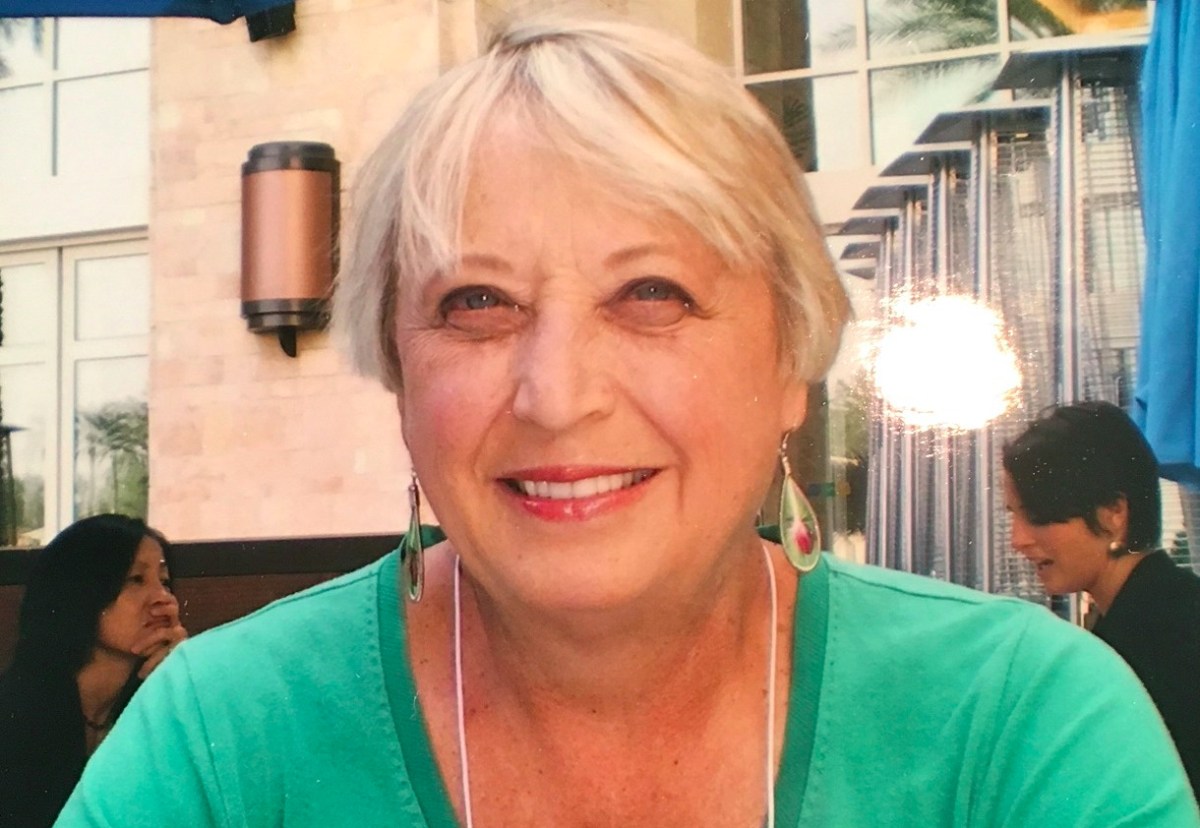
Today I was working on cleaning up my inbox in my personal email.  As my eyes scanned to the bottom of the list of “priority” emails, an area toward the bottom, metaphorically dusty and littered with various articles and links filed in my mind in the “I’ll-get-to-these-later” category, my mouse scanned across one particular message.  And suddenly there it was: the warm, colorful, smiling profile photo of my mom.

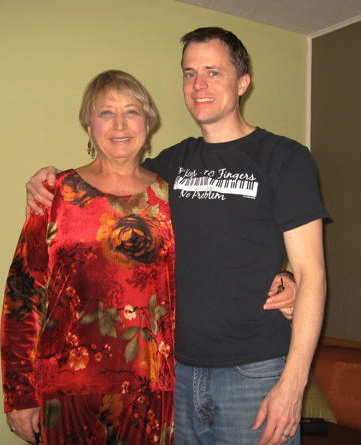
A few Fridays ago on April 21st, 2017, my beautiful mom passed away at age 74.  For around 14 months my mom, along with the enduring and vigilant support of my dad, had been battling cervical cancer.  As I write this post, I still struggle to believe the very words I just wrote: my mom passed away.  You see, my mom’s spirit was so large, so inclusive, so inspirational, so loving, that it seems impossible she will no longer inhabit this earth alongside my father, her family, her precious granddaughters, her friends, her dogs…or me.  Mom was the living, breathing embodiment of life-giving generosity.  She demonstrated unparallelled integrity, self-reliance, humility, and kindness.  How can she be gone?

My mom’s life journey resembled a sacred mission.  Confidently and actively she always reached out to all those she could touch, laying upon them a kind of nurturing, loving, and sage guidance that truly only she could muster.  I remember recently riding in the car with her, sitting in the passenger’s seat.  At my feet were several granola bars taped to water bottles.  “What are these?” I asked.  “Oh, those are for the homeless,” she nonchalantly replied.  Ah, the ones standing on the street corners at the traffic lights, yes.  I knew who she meant.

That’s the kind of person my mother was, right to the very end of her life– an advocate for those who needed a hand up (I’ve written about her before) and a person of unwavering gracious deportment.  One of my final memories of Mom was when she, while lying in hospice care, gently took her ICU doctor’s hand between her own, tilted her head as she was wont to do, and hoarsely uttered the words, “Thank you for your work.”

Always a kind word.  Always a generous acknowledgement. Always a gracious gesture.

And so, the journey begins, the first reluctant steps into a life without my mom.  And, as a friend commented the other night, the silence is stunning.

I suppose I might add, since this blog is dedicated to supporting young readers and writers at home, that writing about my mom is something I plan to do.  Writing is one important way we can hang onto not only moments we’ve lived, but people we’ve loved and people we’ve lost.  People who meant so much to us. Like Mom.

As for my inbox, I don’t think I’ll be cleaning out emails from my beautiful mom anytime soon.  For now, each remnant of her humanity holds priceless value.  I love you, Mom.  Thank you for being so amazing.

IMG_3987

Dedicated to Donna Rae Callaway Ball, 1942-2017